City Mobility
Goal:
Design a solution that helps people plan, adapt, and stay informed about their city journeys, making urban mobility more efficient, predictable, and stress-free.
Tools
Figma | Figjam
Methodology
Design Thinking
Resume
Research
User Research
According to BVA for the European Investment Bank, a staggering 64% of Europeans are ready to transition from cars to public transport, while 61% believe that a greener commute would enhance their lives.
Qualitative Research:
We made interviews to people that use public transport. This was their insights:
. 100% of respondents used Google Maps, and 80% used additional apps for journey planning.
. 80% considered punctuality crucial, and 60% felt anxiety in crowded situations.
. Commuters expressed frustration with unexpected delays, the challenge of choosing the right transportation, and difficulty navigating crowded routes.
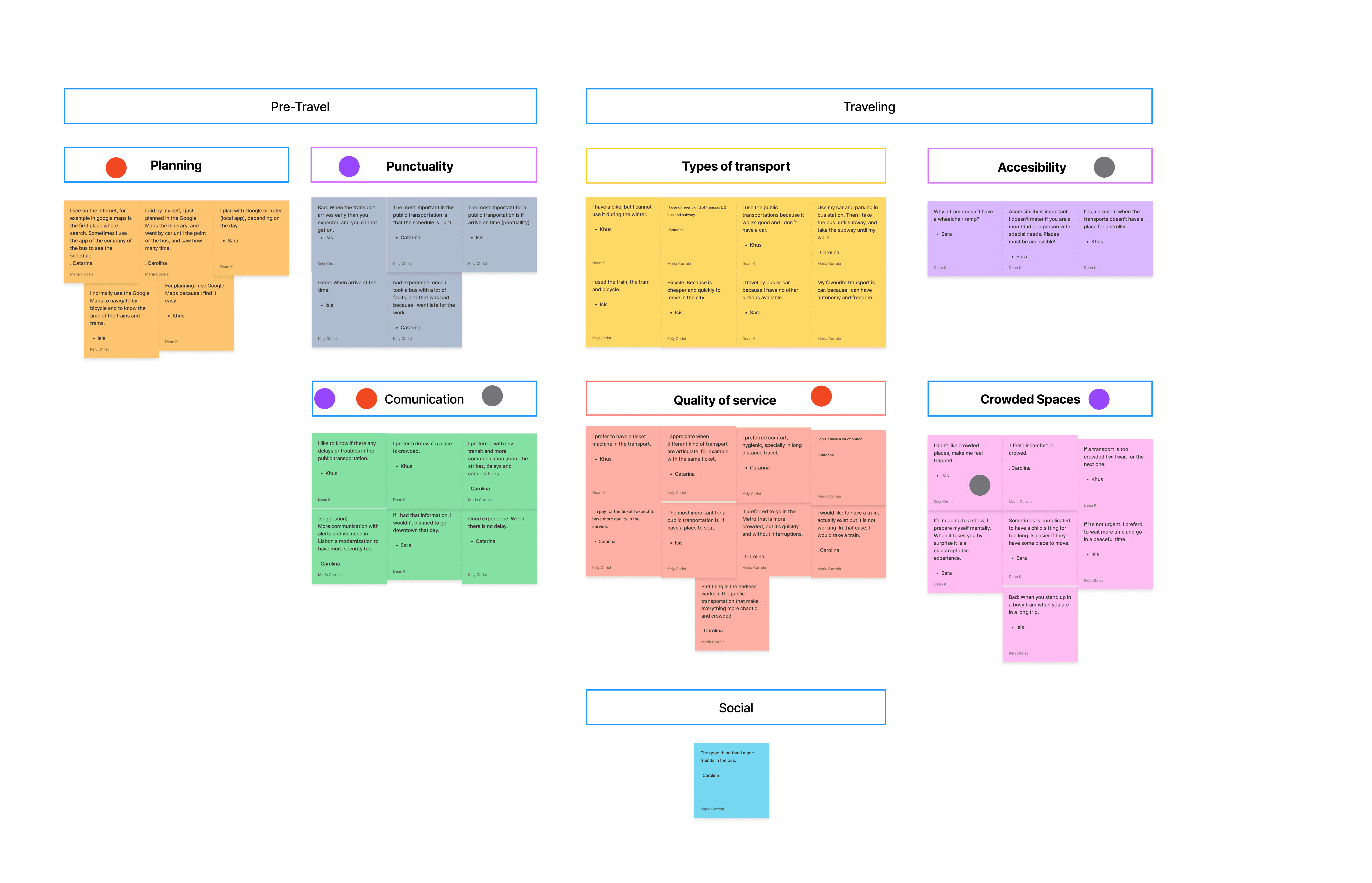
Afinnity Diagram
This process led us to the concerns of our commuters, which encompassed:
Choosing the type of transportation to use
Comparing transportation costs
Addressing accessibility issues (e.g., trolleys, crutches, wheelchairs)
Staying informed about delays
Knowing the volume of people on routes
Predictability models based on AI
Evaluating path difficulty based on geography
Persona & Journey Map
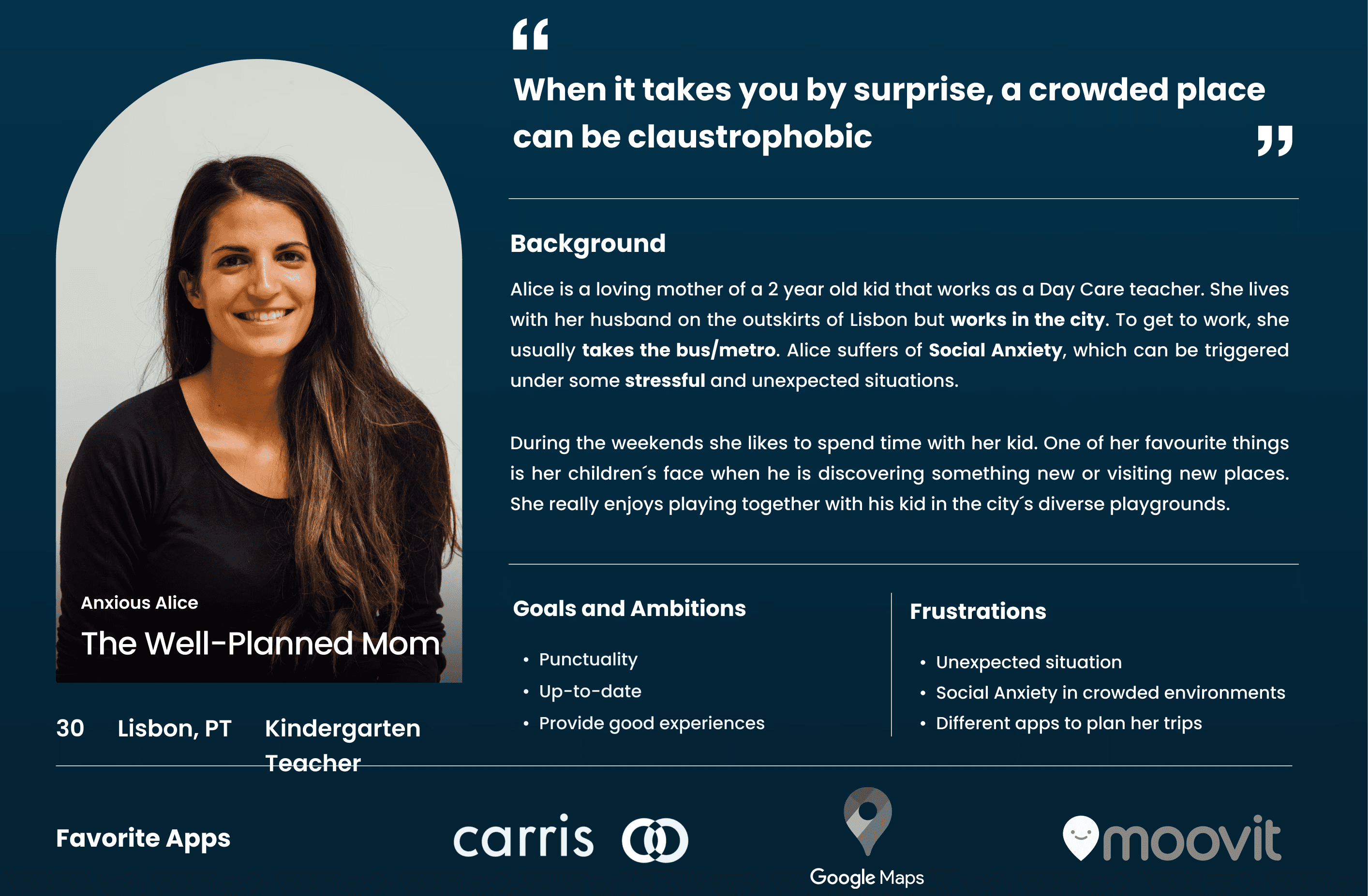
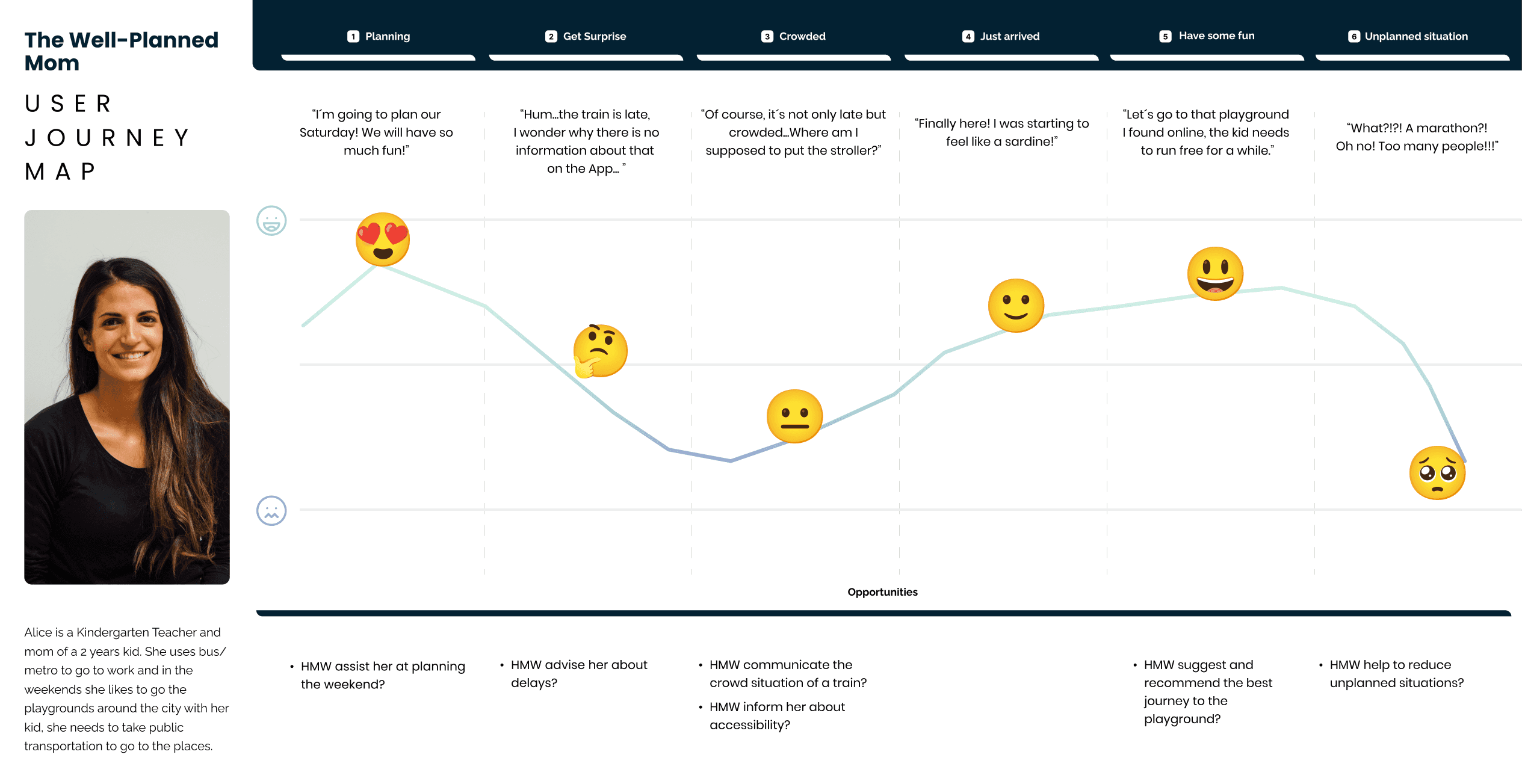
From the research, we created a persona to better understand the daily struggles of urban commuters. Introducing Alice, a 30-year-old mother who experiences anxiety during her commutes and frequently uses public transportation to navigate the city. We developed her User Journey Map to visualize her frustrations, particularly around unpredictable delays, crowded conditions, and the need to use multiple apps for trip planning.
Problem Statement & MVP
Problem Statement
Urban explorers and commuters need a way to plan, adapt, and stay informed about transportation delays and mobility challenges to avoid frustration, anxiety, or irritability resulting from lack of information.
MVP
The MVP (Minimum Viable Product) focused on mobility planning, with features such as: Real-time updates on transport disruptions; notifications for alternate routes; a simplified interface for trip planning and updates.
Prototype
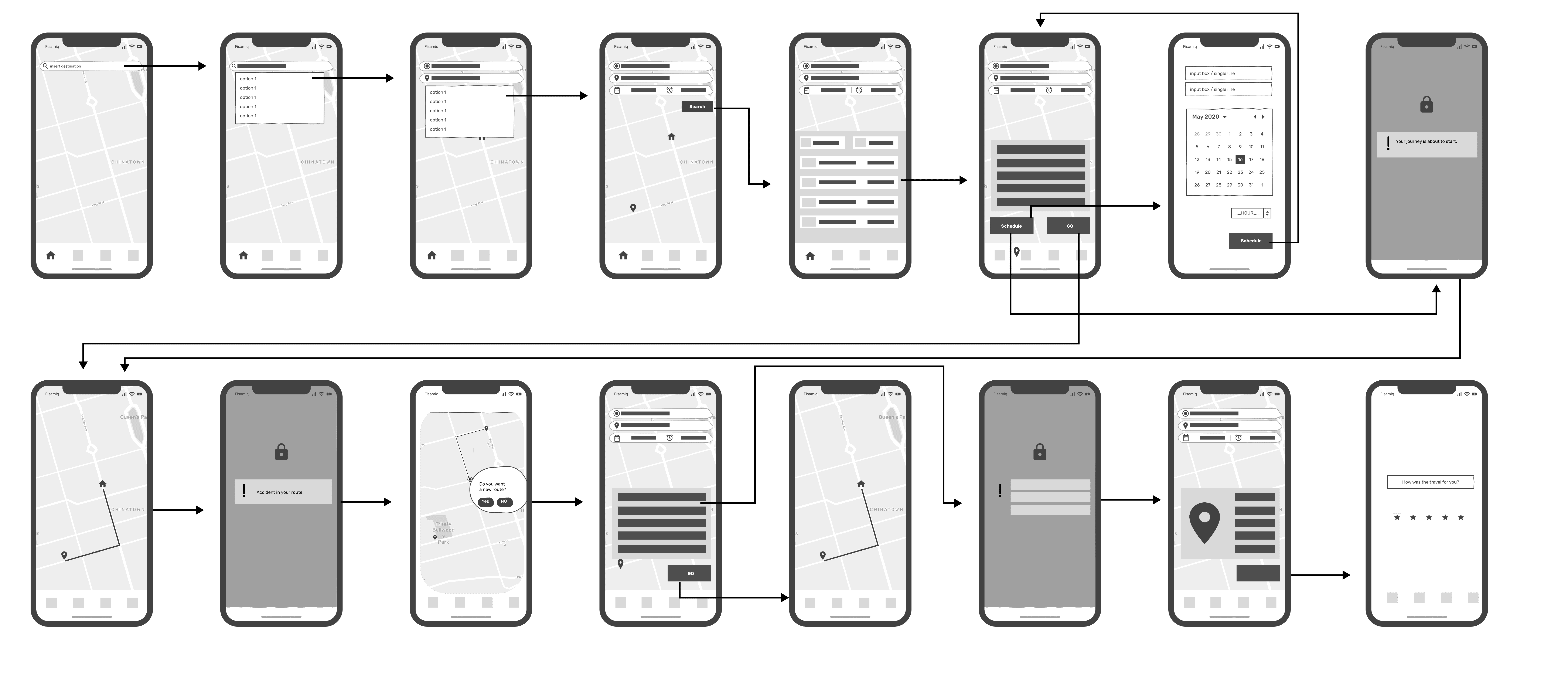
The next step was creating a low-fidelity (lo-fi) prototype, which allowed us to visualize the user experience and test the basic flow of the app. We then conducted concept testing with users, receiving positive feedback on the app’s usability and features. We create a user flow and took the sugestions recived on concept test, for improvement included adding accessibility features and alarm settings to notify users 5–10 minutes before their trip.
Do you want to surf a bigger wave? Check the all article here!
Do you want to check other case study??